Agentic use case
Where Calendar becomes governed execution.
It starts with a person trying to get calendar work done without losing context. They need the next action to be clear, but they also need confidence that the platform has checked the risk, evidence, permissions and downstream impact.
What makes it harder in the real world: Schedule conflicts, commitments and dependencies can quietly break execution. In practice, the work may require the right customer or employee context, policy checks, data quality, approvals, exception routing, integration updates and a clear audit trail.
What Advanze changes: Calendar turns schedule pressure into governed coordination by connecting message, schedule, task and collaboration context to agents, workflow, permissions, approvals and audit evidence before work is completed.
Calendar Intake AgentClassifies new calendar work, identifies intent, urgency, context requirements and the likely execution path.
Calendar Context AgentGathers related records, history, documents, messages, policies, metrics and system state needed for calendar decisions.
Calendar Processing AgentPrepares the recommended action, draft update, workflow step or system change for calendar work.
Guardrail AgentChecks permissions, policy thresholds, sensitive data, financial exposure, compliance implications and approval requirements.
Workflow Orchestration AgentRoutes reviews, manages approvals, records evidence and coordinates safe system updates after approval.
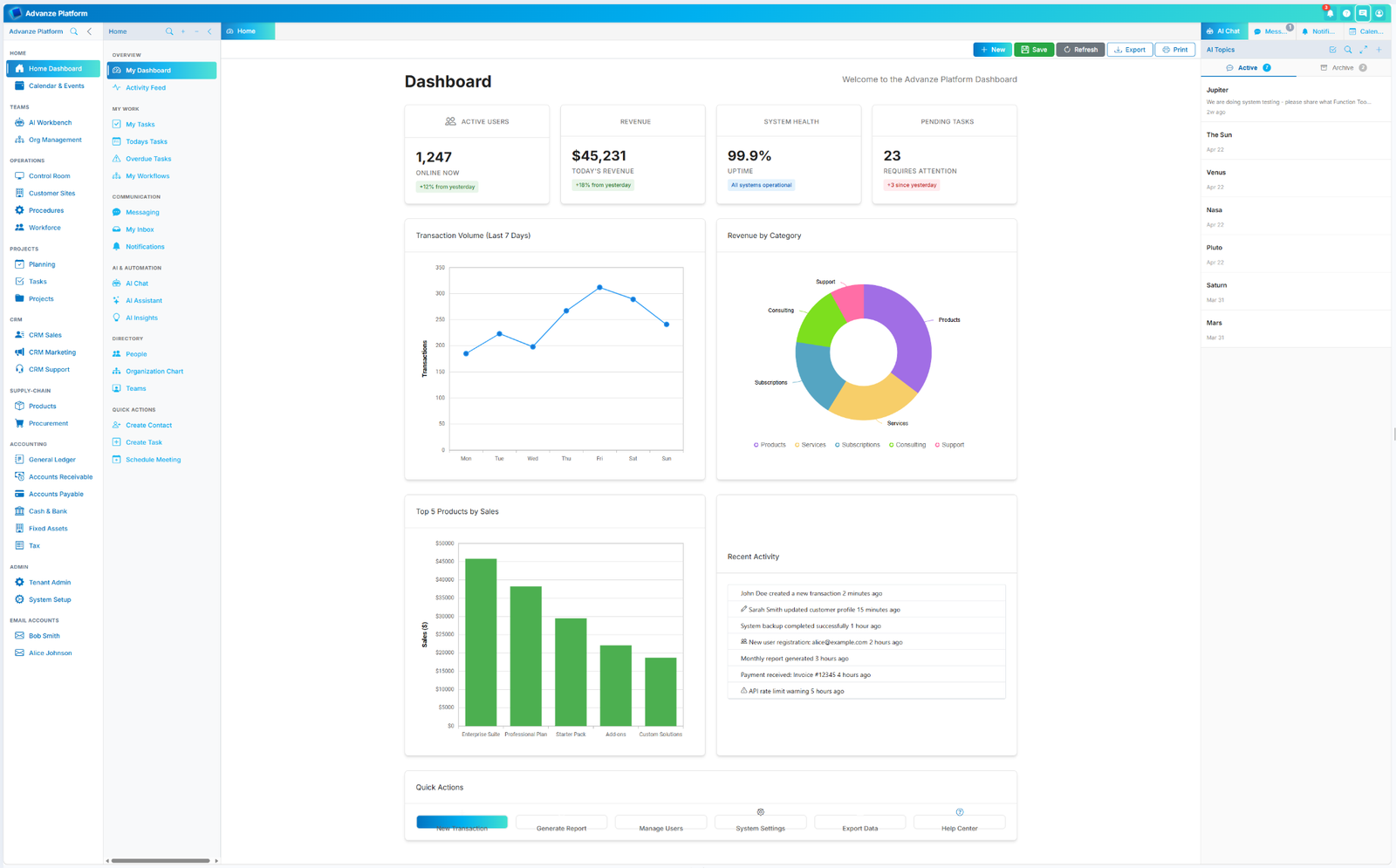
ChallengeCalendar starts as a single app experience, but the real work usually depends on context from other teams, policies, data and systems.
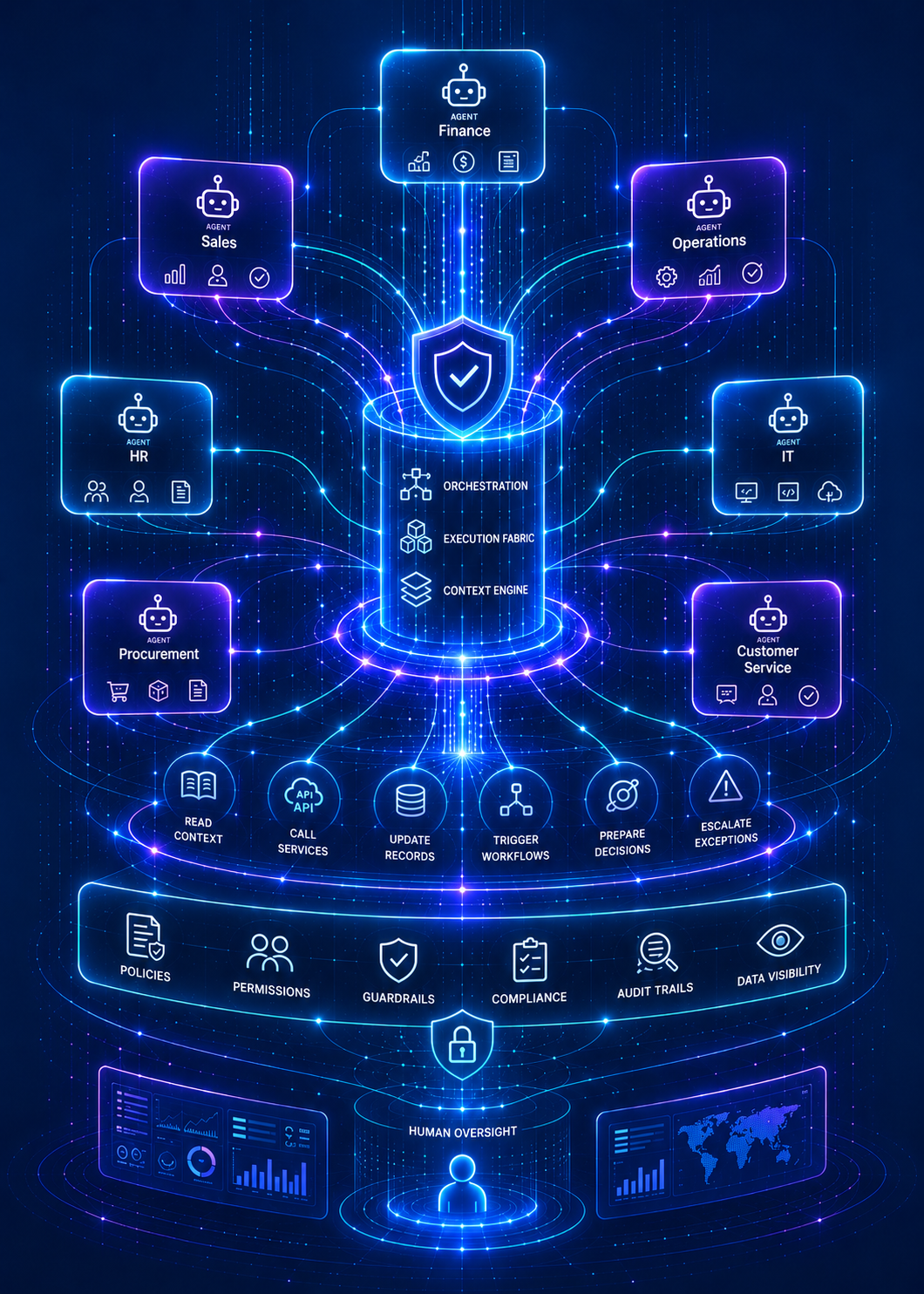
OrchestrationAdvanze treats Calendar as part of a governed execution fabric. The app captures the work, agents gather context, workflow routes approvals and the control model determines what can safely happen next.
SuccessCalendar becomes more than a screen. It becomes a reliable path from intent to controlled action, with people still responsible for judgement and the platform carrying evidence.
Why AI execution needs architecture
The work needs context, controls and clear permissions before automation can safely act.
Calendar is valuable when it participates in the Advanze control model: identity, permissions, workflow, policy checks, data context, audit evidence and human approval boundaries sit inside the execution path.
- Calendar work needs the right message, schedule, task and collaboration context before an agent or user can act with confidence.
- The process often crosses handoffs, approvals, exception paths, SLAs and downstream system updates.
- Different actions need different permission levels: read, draft, update, approve, send, pay, create, close or escalate.
- The business needs evidence of what was requested, what was checked, who approved, what changed and why.