Agentic use case
Where Drive Revenue Growth becomes governed execution.
A salesperson needs to send a proposal quickly.
What makes it harder in the real world: A proposal can include pricing, discounts, delivery commitments, legal terms, billing implications, product scope and operational promises that require review before they become customer-facing commitments.
What Advanze changes: Coordinate proposal drafting, pricing validation, legal terms, margin checks, approval thresholds and customer follow-up before a sales offer is sent.
Sales Context AgentAssembles account, opportunity, prior conversations, product interest and buying stage.
Pricing AgentChecks plan, users, modules, discounts, minimum package and commercial rules.
Legal Terms AgentFlags non-standard contract language, liability concerns and approval needs.
Finance AgentChecks payment terms, margin, invoicing model and revenue implications.
Proposal AgentDrafts proposal content and next-step email with assumptions and approval notes.
ChallengeA proposal can include pricing, discounts, delivery commitments, legal terms, billing implications, product scope and operational promises that require review before they become customer-facing commitments.
OrchestrationCoordinate proposal drafting, pricing validation, legal terms, margin checks, approval thresholds and customer follow-up before a sales offer is sent.
SuccessCoordinate proposal drafting, pricing validation, legal terms, margin checks, approval thresholds and customer follow-up before a sales offer is sent.
Why AI execution needs architecture
The work needs context, controls and clear permissions before automation can safely act.
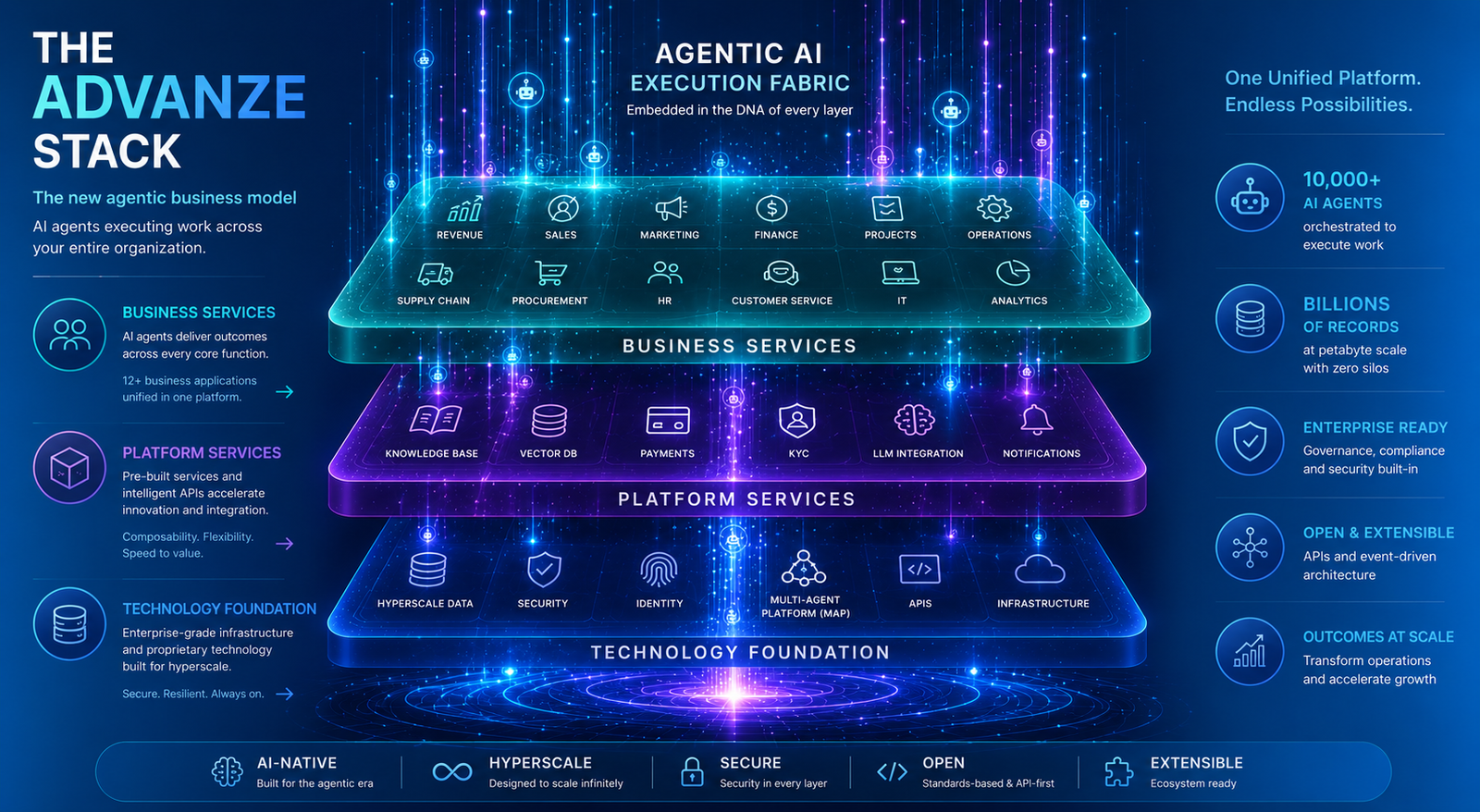
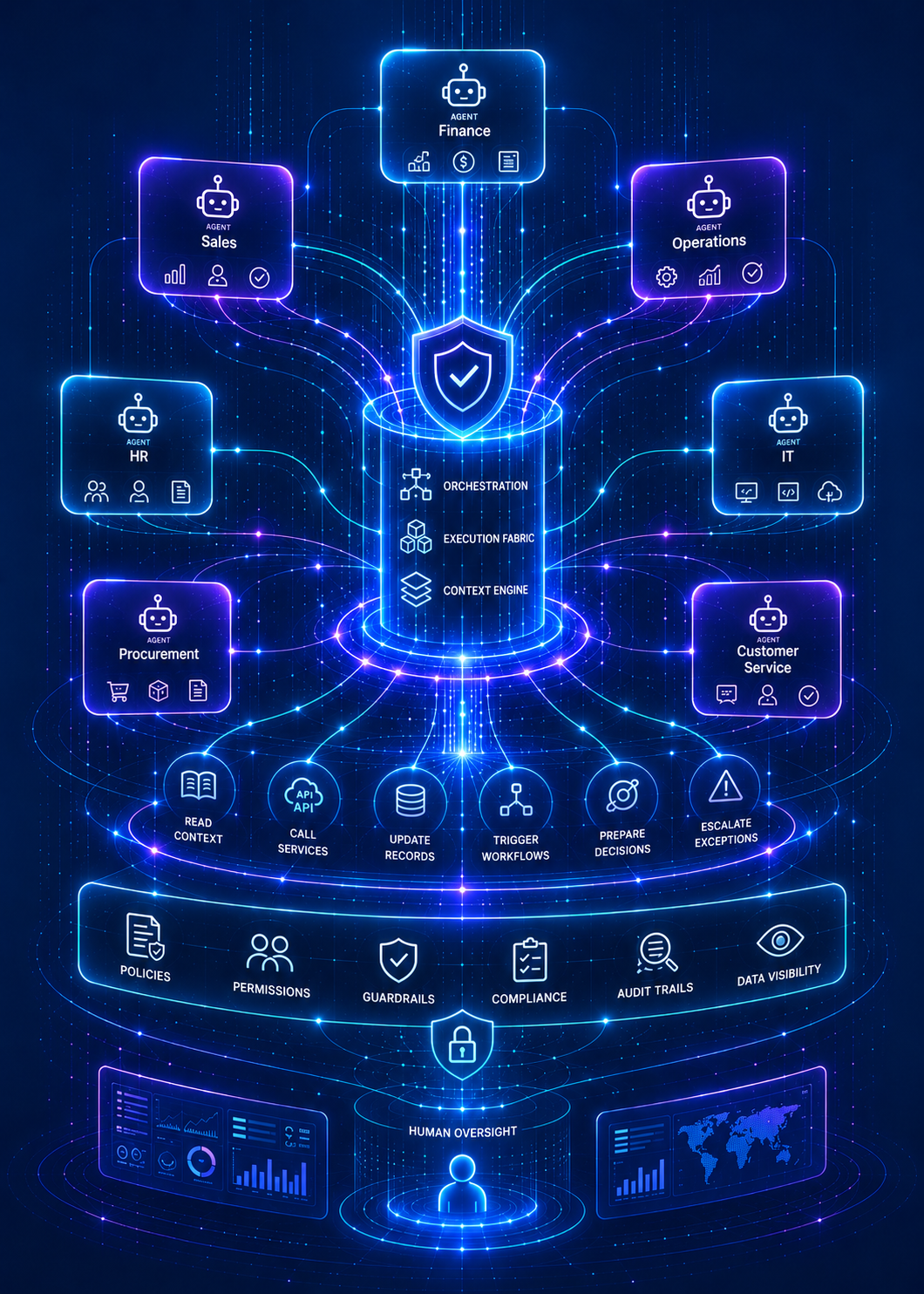
That is why the Advanze control model matters: identity, permissions, policies, workflow, audit evidence and human judgement are embedded into execution before agents act.
- A proposal can include pricing, discounts, delivery commitments, legal terms, billing implications, product scope and operational promises that require review before they become customer-facing commitments.
- The right agent must receive the right context, tools, permissions and approval path before work moves forward.
- Audit evidence, exception handling and human judgement need to be part of the workflow, not notes added after the fact.