
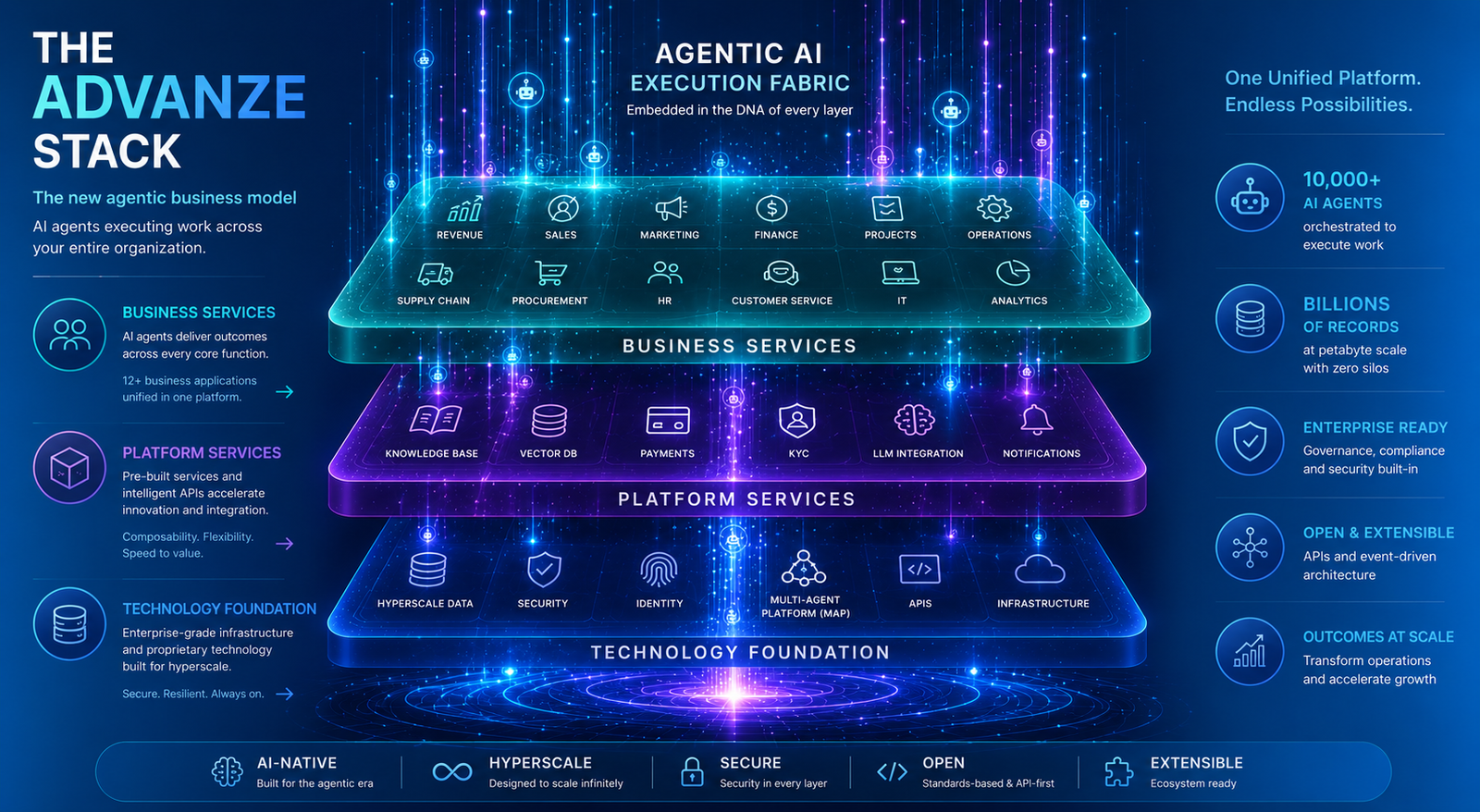
Tool consolidation
Use tool consolidation as part of one operating model, with shared data, governed workflows, auditable actions and AI agents that can execute work while people stay in control.
Business Solution
Enterprise-grade execution without enterprise software sprawl.
Mid-market organisations need faster operating leverage, but often carry fragmented tools, manual approvals and limited integration capacity. Advanze provides a practical path to consolidate and scale.

Solution / Mid-Market
Advanze solutions describe how products, workflows, data, integrations and agents work together to solve an operating problem. For Mid-Market, the focus is practical transformation: reducing fragmentation, creating reliable execution paths and giving people better control over work that crosses teams and systems.
The value is strongest when the capability is connected to adjacent processes. Records, workflows, controls, communications and analytics should participate in a shared execution fabric rather than live in separate tools.

Core capabilities
Each capability is designed to work as part of the broader execution platform rather than as a disconnected module.
Use tool consolidation as part of one operating model, with shared data, governed workflows, auditable actions and AI agents that can execute work while people stay in control.
Use workflow automation as part of one operating model, with shared data, governed workflows, auditable actions and AI agents that can execute work while people stay in control.
Use shared reporting as part of one operating model, with shared data, governed workflows, auditable actions and AI agents that can execute work while people stay in control.
Use approval controls as part of one operating model, with shared data, governed workflows, auditable actions and AI agents that can execute work while people stay in control.
Use agent capacity as part of one operating model, with shared data, governed workflows, auditable actions and AI agents that can execute work while people stay in control.
Use phased rollout as part of one operating model, with shared data, governed workflows, auditable actions and AI agents that can execute work while people stay in control.
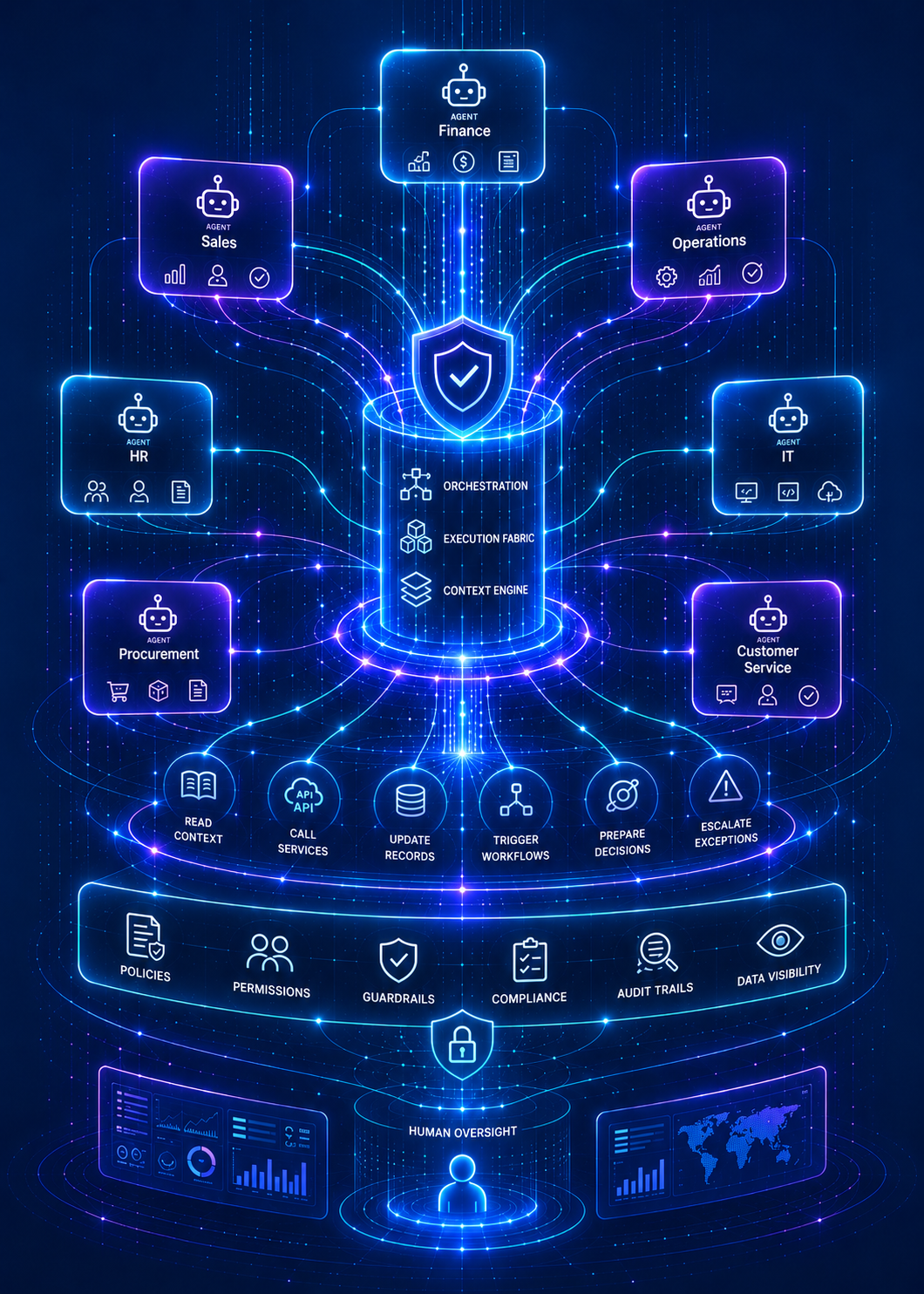
Agentic operating model
Advanze treats AI agents as participants in the operating model. Agents can read context, call services, update records, trigger workflows, prepare decisions and escalate exceptions. Human teams remain responsible for judgement, governance and business accountability.
The goal is to create an execution platform where work can move across functions with consistent permissions, policies, audit trails and data visibility.
Business outcomes

Agentic use case
Teams want to use AI more widely.
What makes it harder in the real world: The cost of enterprise AI is not only token price. It includes context packaging, orchestration, approvals, safety layers, retries, evaluations, auditability and operations support.
What Advanze changes: Control AI execution by routing tasks to the right model, setting run budgets, applying permissions, stopping loops and reporting usage by use case.
The cost of enterprise AI is not only token price. It includes context packaging, orchestration, approvals, safety layers, retries, evaluations, auditability and operations support.
Control AI execution by routing tasks to the right model, setting run budgets, applying permissions, stopping loops and reporting usage by use case.
Control AI execution by routing tasks to the right model, setting run budgets, applying permissions, stopping loops and reporting usage by use case.



Why AI execution needs architecture
That is why the Advanze control model matters: identity, permissions, policies, workflow, audit evidence and human judgement are embedded into execution before agents act.
Implementation path
Advanze can be introduced progressively. Start with a visible workflow, prove the operating model, then expand into adjacent capabilities as the platform foundation matures.
Map workflows, systems, data sources and manual coordination points around this capability.
Define data, approvals, agent tasks, service calls and governance controls.
Start with a bounded use case that proves the operating pattern and creates reusable platform assets.
Extend the pattern to adjacent workflows, more agents, more users and deeper integrations.
Next step
Explore how Mid-Market can be implemented as part of a broader Advanze platform adoption programme.