Skip to content

Execution Platform

API Services

Unified data, services, workflows and agents in one operating substrate.

API Services is part of the Advanze platform layer: the execution foundation that enables applications, services and AI agents to work as one operating system for the business. It is designed for extensibility, governance and scale from the start.

Platform and governance team reviewing AI execution, controls and architecture.
API Services starts with people trying to make the right call. Teams want to use AI more widely.

Execution Platform / API Services

Built as an execution foundation

Advanze is positioned around the idea that enterprise software must evolve from passive systems of record into active systems of execution. In that model, this page is not just a feature description. It explains how API Services contributes to an operating environment where people define intent, agents execute governed work, and leadership can see progress through unified data.

The value is strongest when the capability is connected to adjacent processes. Records, workflows, controls, communications and analytics should not live in separate tools. They should participate in a shared execution fabric that can coordinate work across departments while preserving human accountability.

Platform and governance team reviewing AI execution, controls and architecture.
Where API Services becomes real work people can trust. Platform, architecture and governance teams controlling agentic execution, cost and operational risk.

Core capabilities

What API Services enables

Each capability is designed to work as part of the broader execution platform rather than as a disconnected module.

RESTful API Design

Well-documented REST APIs with consistent patterns across all platform services. AI agents generate client SDKs, maintain API documentation and version endpoints while providing developers with predictable interfaces that follow industry best practices and reduce integration complexity across services.

Authentication & Authorization

OAuth 2.0 and API key authentication with granular permission controls. Agents validate credentials, enforce rate limits and audit API access while providing secure integration paths and ensuring only authorized applications can access sensitive data through well-defined permission boundaries.

Rate Limiting & Throttling

Intelligent request throttling protects backend systems from overload and ensures fair usage. Agents monitor consumption patterns, apply tiered limits and notify approaching thresholds while maintaining platform stability and providing developers with clear feedback on rate limit status and reset timing.

SDK Libraries

Pre-built SDKs for popular languages accelerate integration and reduce boilerplate code. Agents maintain SDK versions, publish to package managers and ensure compatibility while providing developers with idiomatic client libraries that handle authentication, retries and error handling automatically.

Usage Analytics

Real-time API usage dashboards track call volumes, error rates and performance metrics. Agents identify integration issues, measure adoption and provide billing data while offering insights to optimize API consumption patterns and improve developer experience through performance recommendations and best practices.

Developer Support

Comprehensive API documentation with code examples and interactive testing consoles. Agents maintain reference docs, provide example code and monitor community questions while ensuring developers have resources to successfully integrate with platform services and resolve common issues independently.

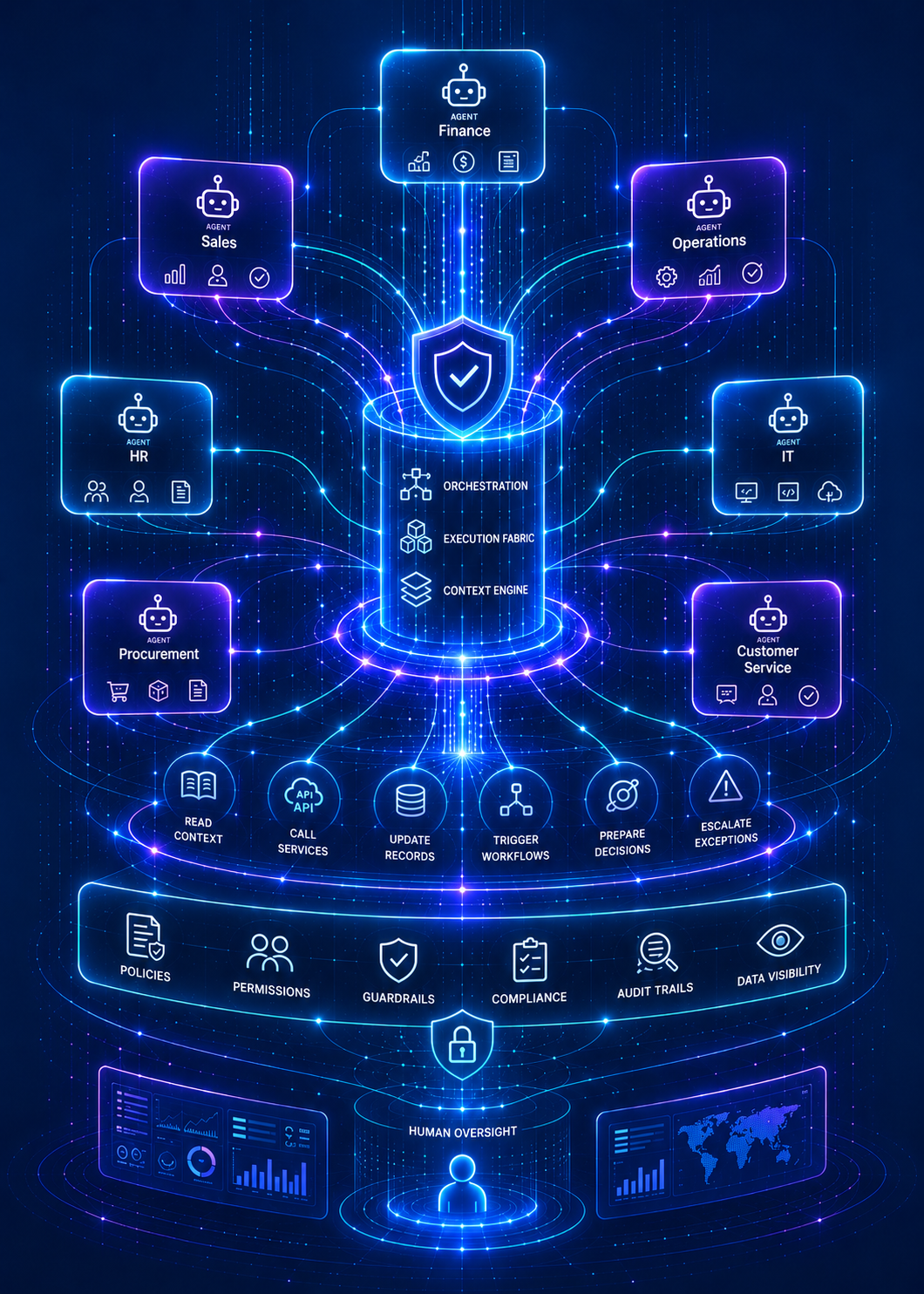
The Advanze Control Model - AI Agents Execute Work Inside the Control Model

Agentic operating model

AI agents execute work inside the control model

Advanze treats AI agents as participants in the operating model. Agents can read context, call services, update records, trigger workflows, prepare decisions and escalate exceptions. Human teams remain responsible for judgement, governance and business accountability.

That distinction matters. The goal is not to add another chatbot to existing systems. The goal is to create an execution platform where work can move across functions with consistent permissions, policies, audit trails and data visibility.

Business outcomes

What becomes possible

Scale by designArchitecture supports growing workloads, data and agent activity.
Governed automationSecurity, identity and controls are embedded in execution paths.
Composable servicesTeams can build faster using reusable platform capabilities.
Operational confidenceTelemetry and auditability make execution observable.
Platform and governance team reviewing AI execution, controls and architecture.
The outcome is not just automation. It is confidence in what happens next. When API Services runs inside a governed execution model, teams can move faster without losing judgement, accountability or trust.

Agentic use case

Where API Services becomes governed execution.

Teams want to use AI more widely.

What makes it harder in the real world: The cost of enterprise AI is not only token price. It includes context packaging, orchestration, approvals, safety layers, retries, evaluations, auditability and operations support.

What Advanze changes: Control AI execution by routing tasks to the right model, setting run budgets, applying permissions, stopping loops and reporting usage by use case.

Router AgentSelects the smallest capable model or workflow path for the task.
Budget AgentTracks per-run and monthly use-case budgets.
Evaluation AgentChecks output quality, policy fit and repeated failure patterns.
Runtime Control AgentStops loops, retries safely and escalates when budget or quality thresholds are breached.
OwnerReviews value, adoption, cost and exceptions.
Challenge

The cost of enterprise AI is not only token price. It includes context packaging, orchestration, approvals, safety layers, retries, evaluations, auditability and operations support.

Orchestration

Control AI execution by routing tasks to the right model, setting run budgets, applying permissions, stopping loops and reporting usage by use case.

Success

Control AI execution by routing tasks to the right model, setting run budgets, applying permissions, stopping loops and reporting usage by use case.

Platform and governance team reviewing AI execution, controls and architecture.
AI runtime control 7Platform, architecture and governance teams controlling agentic execution, cost and operational risk.
Platform and governance team reviewing AI execution, controls and architecture.
AI runtime control 8Platform, architecture and governance teams controlling agentic execution, cost and operational risk.
Platform and governance team reviewing AI execution, controls and architecture.
AI runtime control 9Platform, architecture and governance teams controlling agentic execution, cost and operational risk.

Why AI execution needs architecture

The work needs context, controls and clear permissions before automation can safely act.

That is why the Advanze control model matters: identity, permissions, policies, workflow, audit evidence and human judgement are embedded into execution before agents act.

  • The cost of enterprise AI is not only token price. It includes context packaging, orchestration, approvals, safety layers, retries, evaluations, auditability and operations support.
  • The right agent must receive the right context, tools, permissions and approval path before work moves forward.
  • Audit evidence, exception handling and human judgement need to be part of the workflow, not notes added after the fact.

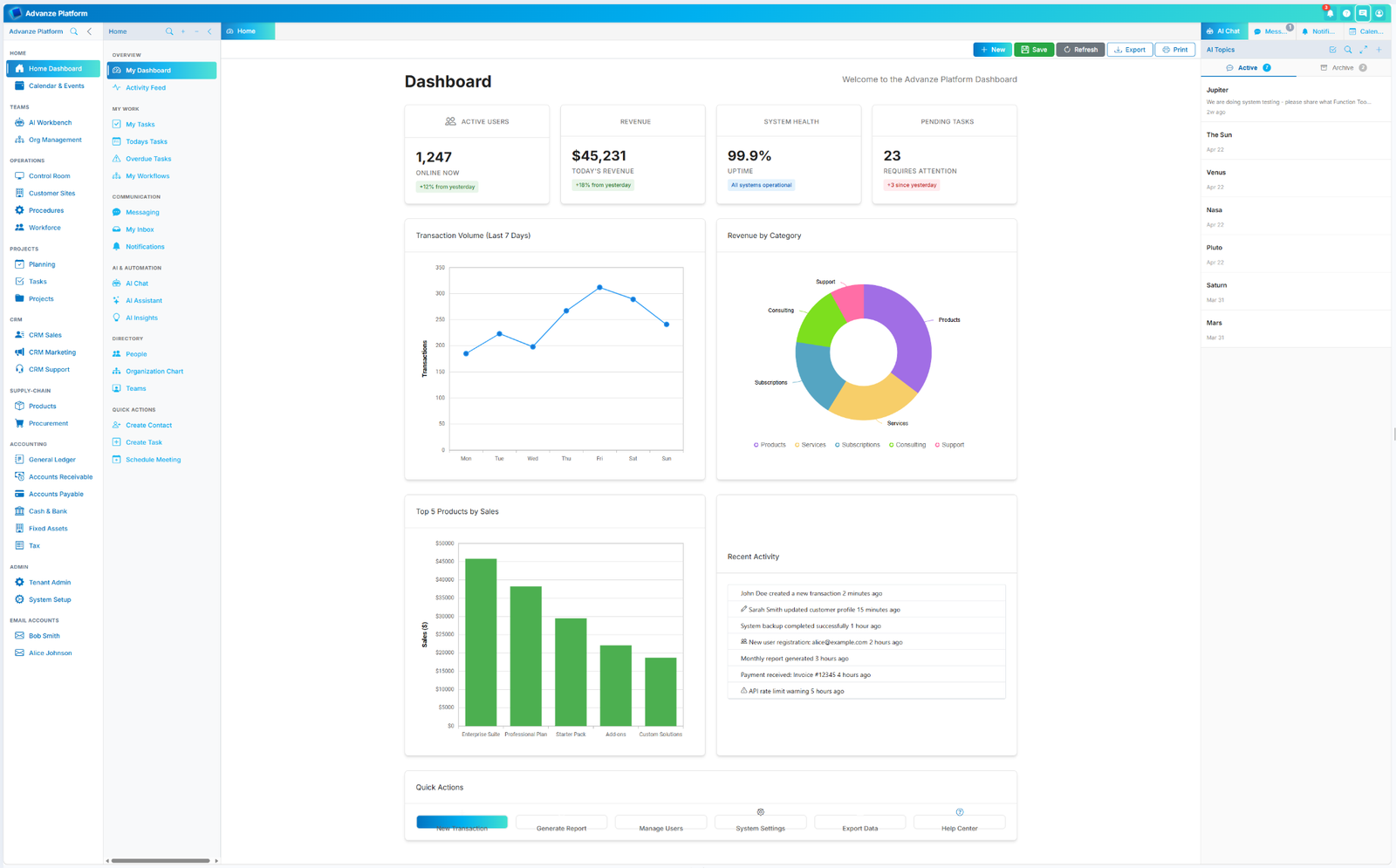
Implementation path

How to move from concept to production

Advanze can be introduced progressively. The recommended path is to start with a visible workflow, prove the operating model, then expand into adjacent capabilities as the platform foundation matures.

  1. 1
    Assess the current operating model

    Map the workflows, systems, data sources and manual coordination points around this capability.

  2. 2
    Design the target execution flow

    Define the data model, human approvals, agent tasks, service calls and governance controls.

  3. 3
    Launch a focused implementation wave

    Start with a bounded use case that proves the operating pattern and creates reusable platform assets.

  4. 4
    Scale across the business

    Extend the pattern to adjacent workflows, more agents, more users and deeper integrations.

Next step

Build this into your execution platform roadmap

Explore how API Services can be implemented as part of a broader Advanze platform adoption programme, from first pilot to enterprise scale.